Diary
The Third Gravel Crash
A gravel washout on the way to Hawk Hill, and everything I got wrong about tire pressure.
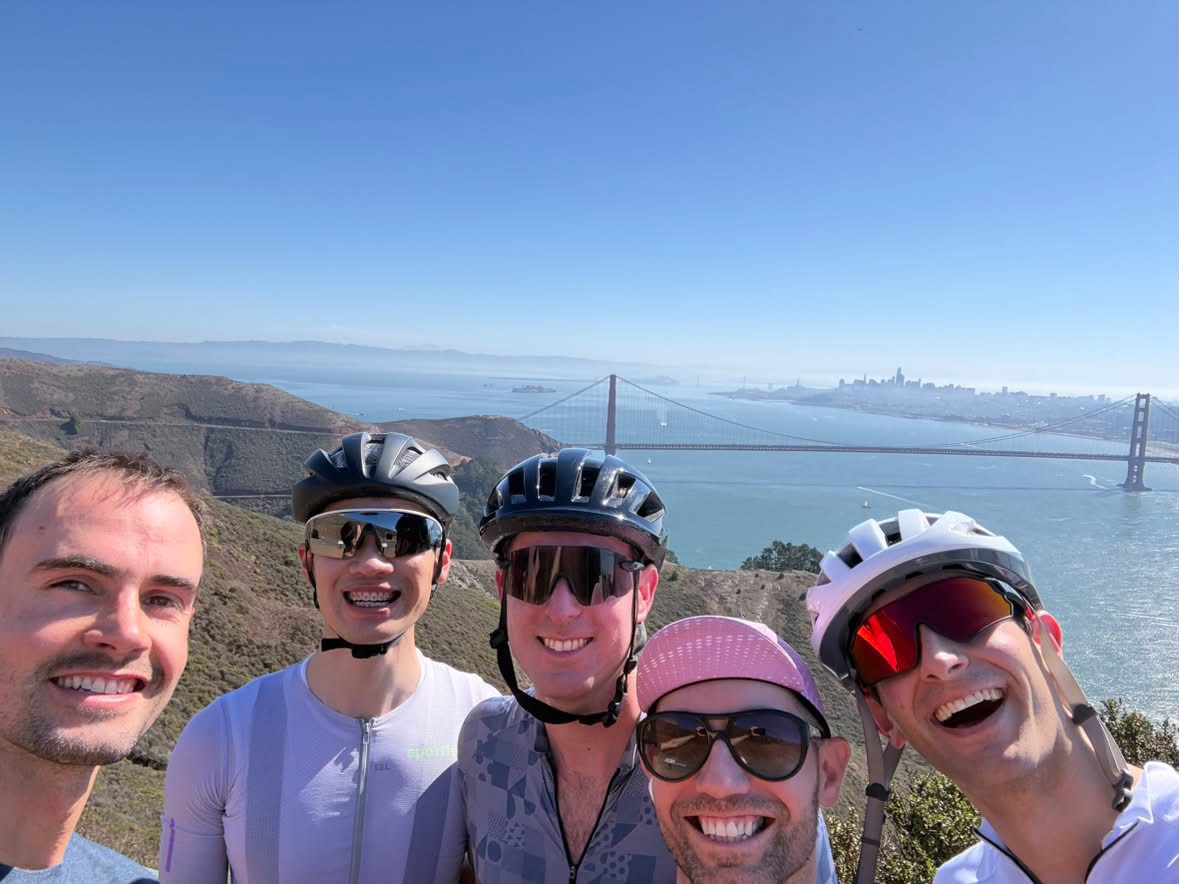
It was supposed to be my first group ride in the Bay Area.
I moved here at the end of January, and in all these months I'd never joined a single group ride. Honestly, I was afraid of exactly what ended up happening: crashing in front of people I'd just met. So I spent the last eight months practicing on my own, though clearly not enough on gravel or in crowded tourist spots. I learned to ride clipless: clipping in and out, even on slopes, with maybe four clipless moments along the way. Then I met Mark on Hinge. He lives in San Francisco and rides almost every week, and he mentioned his crew was heading to Hawk Hill this Saturday. Funny thing is, I'd seen those clips on Instagram and TikTok, the winding road above the shoreline with the city skyline behind it, but I never knew the place was called Hawk Hill. That was the push I needed to finally join my first group ride.
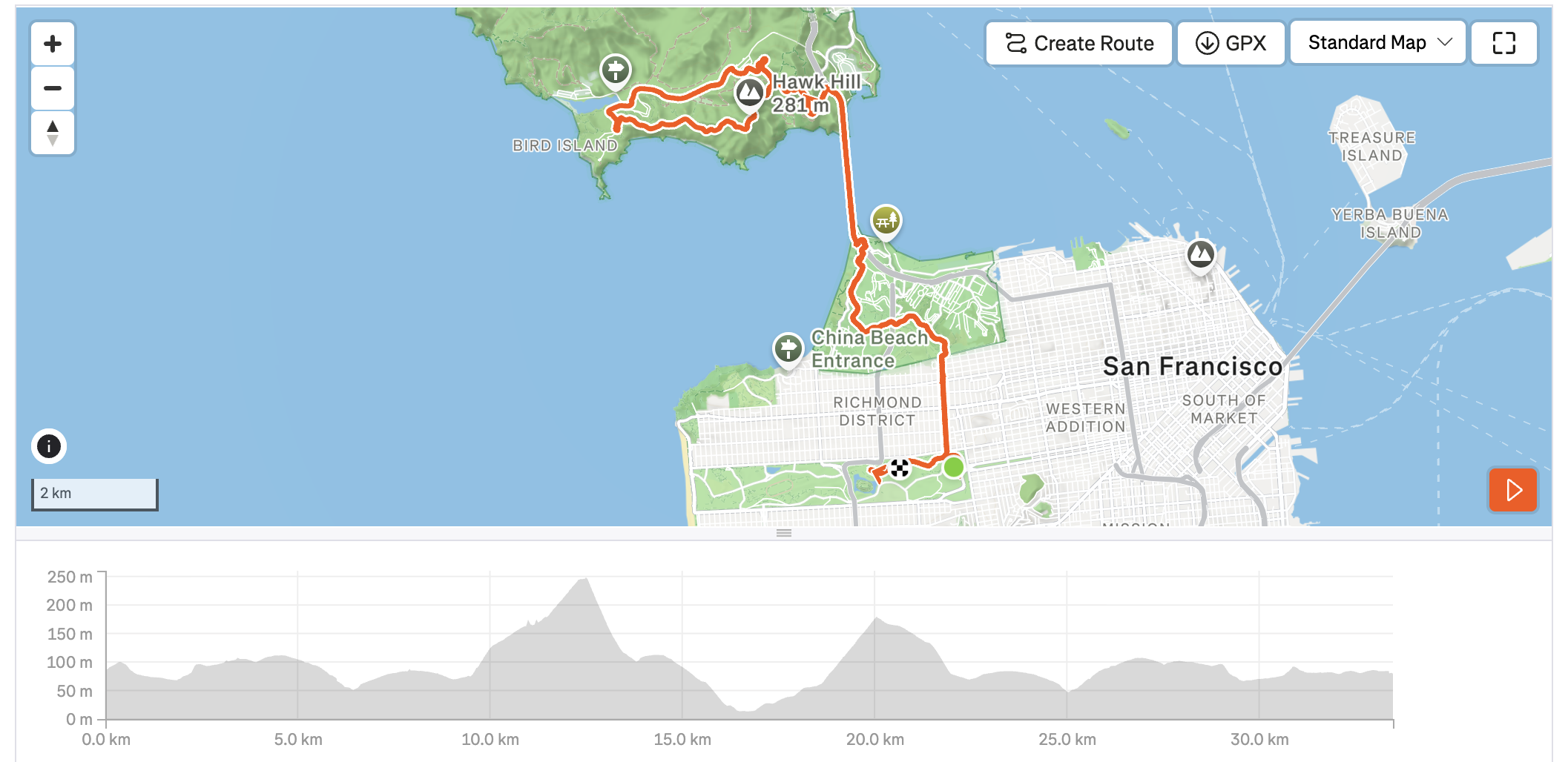
So on Saturday morning I drove over 80 minutes to Golden Gate Park (two crashes on the Bay Bridge had traffic at a crawl) and met Mark plus three of his friends: Justin, Chris, and Owen. Thankfully, they all turned out to be genuinely nice people, and we rolled out together.
Going in, I thought the hard parts would be the crowded Golden Gate Bridge or the famous 18% descent on Hawk Hill. Then, maybe ten minutes in, just before the bridge: gravel. Just a short patch, nothing dramatic. But I have history with gravel. All three of my crashes have been on the stuff, so my whole body tensed up. This time I thought I did everything right: hands light on the bars, no grabbing the brakes, just floating through.
Then came a gentle turn, and the front wheel simply washed out sideways before I even had time to feel scared. One moment I was riding; the next I was sliding across the ground.
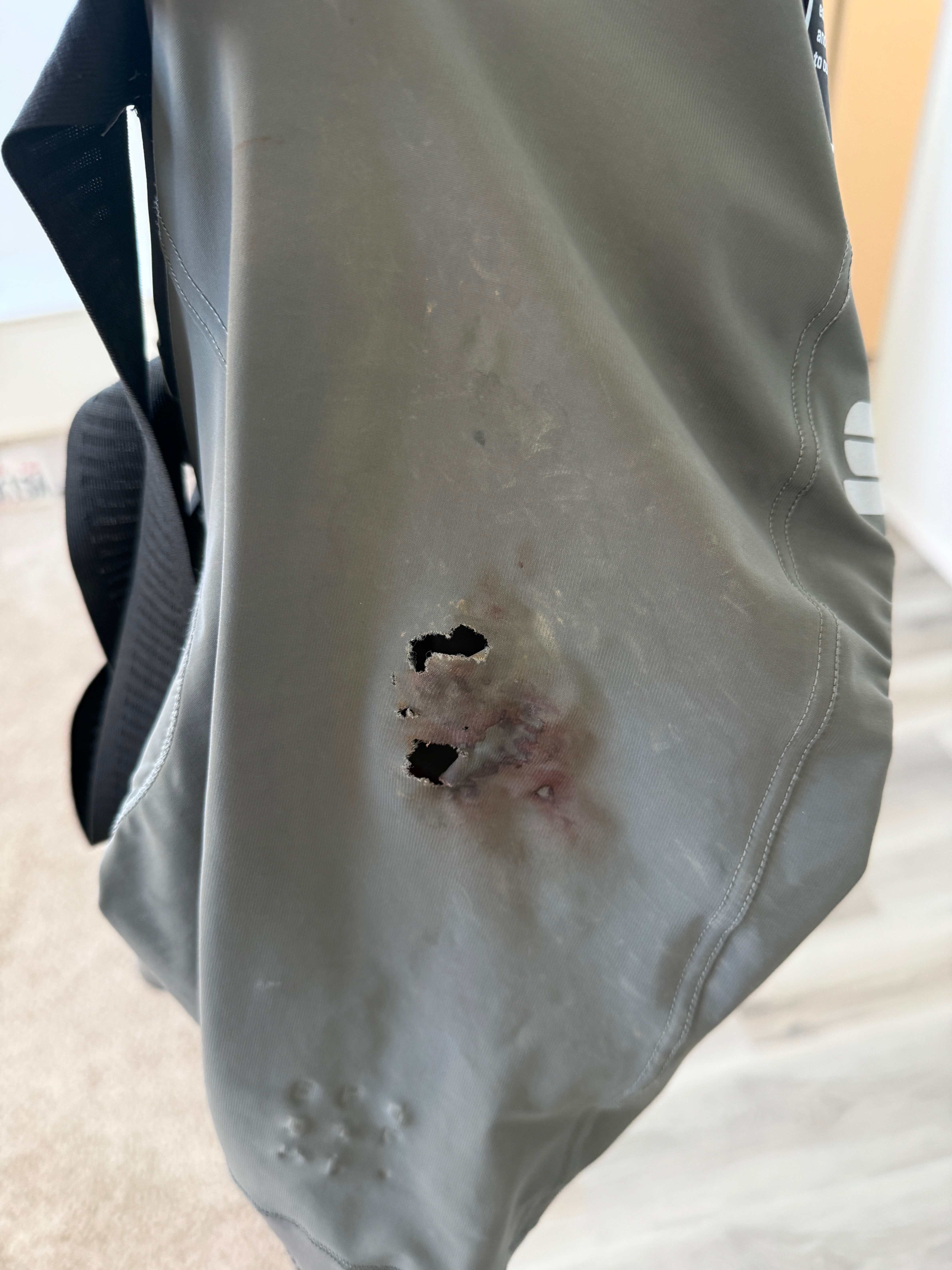
I ended up with road rash on my arm and elbow, a long scrape across my thigh and hip, and my Sportful bib shorts torn open (thankfully they offer crash replacement). No head injury, nothing broken, just my pride and some skin. The bike didn't escape untouched either: the bar tape tore, and the front derailleur started making a strange noise when switching after I kicked either the chainring or the derailleur itself in the fall. And yes, I was embarrassed. Nothing says "first impression" like crashing in front of your date's friends.
The frustrating part was that I saw it coming and still couldn't save it. I had no idea why it happened again, until Chris walked over, squeezed my tire, and said it felt too firm. My tires were at 90 psi.
Ninety psi on 28mm Grand Prix 5000s. The night before, I'd pumped them up for "a fast road ride," and it never crossed my mind I'd touch gravel.
I'll say it plainly: I hate riding across the Golden Gate Bridge. Not the wind or the view. It's the endless 90-degree turns around the towers, those tight little chicanes, plus the crowds of tourists. At every tower I'm just waiting for someone to stop dead in front of me. That's actually how I fell the first time I rode across.
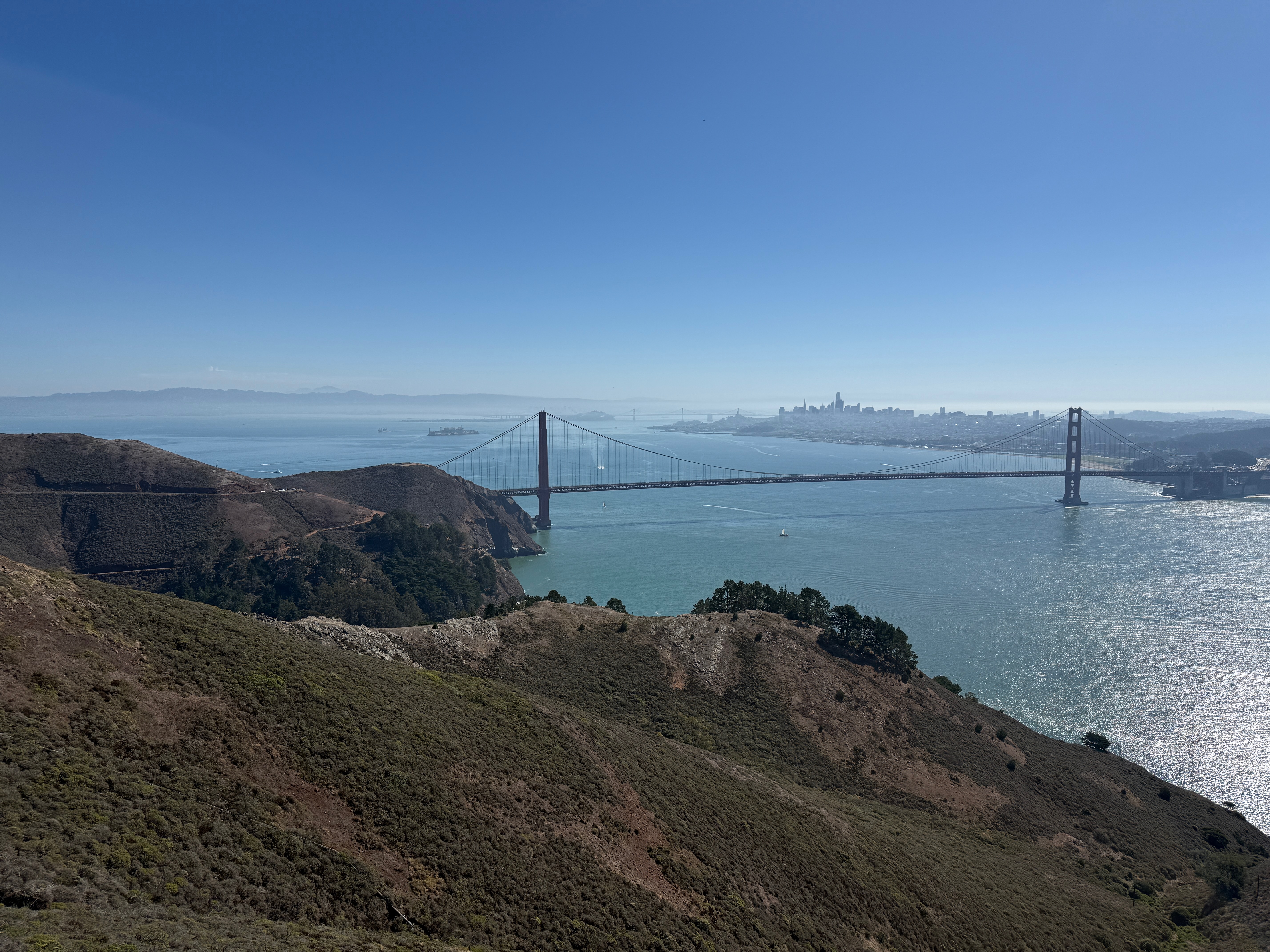
Hawk Hill itself was genuinely stunning, with Conzelman Road curling upward in a very sunny and warm day. I even survived the much-talked-about 18% descent without any drama. Steep gradients were never my problem; gravel is. Next time I'll drive to the Marin side and start from there, and let the bridge keep its tourists.
Three times on gravel
Since we're here, the full rap sheet:
Crash one was in Seattle, at the annual Tour de Whidbey on Whidbey Island, which was also my first group ride there, all of three people. Nearly 80 km in, on a downhill turn, I grabbed the brakes way too hard on a gravel patch and the bike slid out from under me. Someone later told me the rule is both brakes together, light and quick, like you're pumping them. It was the worst of the three: my bib shorts were completely torn, and I still remember standing on the roadside holding my ruined shorts together.
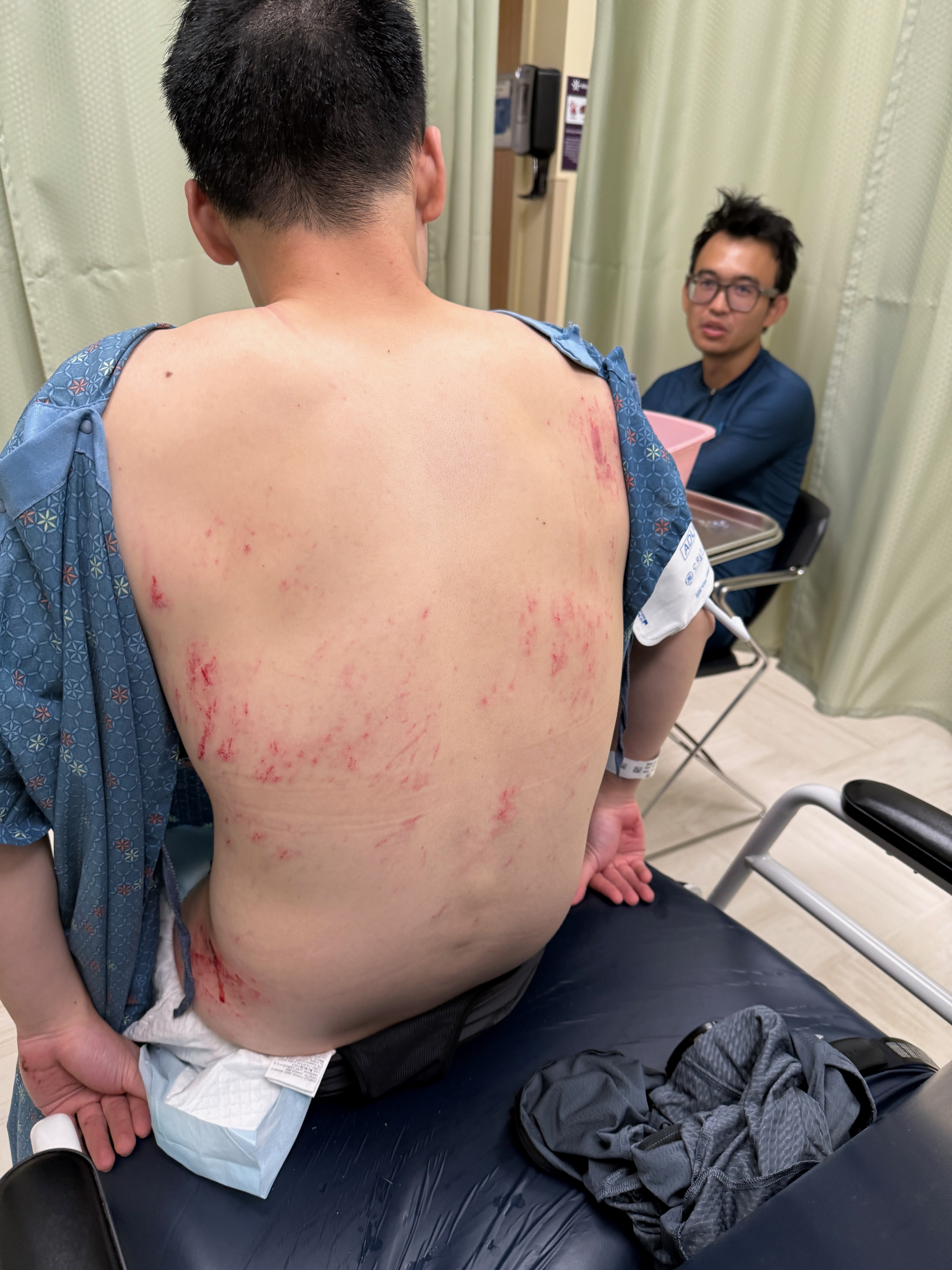
Crash two was another mostly-road ride with a surprise gravel section on a descent. This time I was trying to turn, and I probably touched the brakes: just a light squeeze, not a grab. Still, I went down.
Crash three was yesterday: alert, no braking at all, and I still went down, because 90 psi on gravel doesn't care how vigilant you are.
What I got wrong, part one: tire pressure
For years, my mental model of tire pressure felt like simple physics: pump it hard, the tire gets round and firm, the contact patch shrinks, less friction, more speed. High pressure equals free speed. Everybody "knows" this.
It turns out to be half right, which is the most dangerous kind of wrong.
The half that's right: a harder tire deforms less with each revolution, so less energy is lost to the rubber squishing and rebounding, which engineers call hysteresis. On a perfectly smooth steel drum in a lab, high pressure wins. That's where my model works.
The half I was missing: roads aren't steel drums. A rock-hard tire can't conform to little stones and cracks. Instead, the whole bike, plus 60 kilos of me, gets bounced upward. Every one of those bounces wastes real watts. On actual pavement, that bouncing loss is far bigger than whatever you saved from the smaller contact patch.
Think of it like shoes: hard leather soles on a marble floor are efficient, but on a gravel trail every step bounces you around and you'd kill for sneakers. Wide tires at lower pressure are the sneakers.
And here's the part that directly caused my crash: a smaller contact patch also means less grip. Less grip isn't "faster." It's just less safe. On gravel, my overinflated 28s were basically skipping across the surface like stones on a pond. No wonder the front wheel washed out without warning.
The other thing I learned: wider tires need lower pressure. Your weight is supported by pressure × contact patch area, so a wider tire supports the same rider at lower pressure. Plus, the tension in the tire casing scales with pressure × radius, meaning the same pressure in a wider tire stresses the casing more, which is why wide tires are rated for lower max pressures. The pros have figured this out: riders my weight are racing 28s and 30s at 65–70 psi now, and at Paris-Roubaix they run in the fifties.
I ran my numbers through SRAM's tire pressure calculator afterward (you plug in rider weight, tire width, and tube type; I run Tubolito TPU tubes, for the record). For 60 kg on 28mm tires, it recommends the mid-50s. I was at 90, over 30 psi too high on a day with gravel in it. That solved the mystery.
What I got wrong, part two: braking on gravel
About that "both brakes, light and quick" advice. It turns out it's directionally right, and here's the actual reasoning.
On a loose surface, your front tire has almost no grip to spare. Grab the front brake and two things happen: your weight pitches forward, unloading the rear, and all the braking demand lands on a tire that's already barely holding on. The front washes out, and you're on the ground before your brain finishes the sentence. That's crash one, textbook.
So the real rules, as I now understand them:
Brake before the turn, never in it. Do all your slowing while the bike is upright, then release and roll through the turn. A leaned-over tire on gravel has zero spare grip for braking, which is what happened in crashes two and three.
Both brakes, gentle and progressive. The "light and quick pumps" thing is basically human ABS, which is fine as training wheels, but the actual skill is modulation: squeeze gradually, never snatch. On loose stuff, a skidding rear wheel is recoverable; a skidding front wheel is a crash. So when in doubt, bias slightly rear.
On gravel descents, get your weight back. Butt behind the saddle, heels down, let the bike wander a little underneath you instead of strangling the bars. And look where you want to go, not at the gravel you're afraid of.
That evening, Muse wrote me a debrief letter, "The Third Gravel Crash," covering the crash itself, cornering fixes, and how to reshape my training week around road rash. It was genuinely good. But the tire pressure and braking sections rewired my thinking, because they challenged beliefs I didn't even know I held.
Rules I'm taking with me
1. Check the route. Any chance of gravel means dropping pressure before I roll out, not doing forensics on the ground afterward.
2. When in doubt, go lower. A few psi soft is fast and safe. A few psi hard on gravel is a crash.
3. Use the calculator, not vibes. I have a pump with a gauge. There's no excuse for 90 psi anymore.
4. Slow before, flow through. All braking done upright and early; the turn itself is for rolling, not stopping.
There's a saying I keep coming back to: no pain, no gain. If I hadn't washed out yesterday, I'd still be pumping to 90 and wondering why gravel has it out for me. So was it worth some skin, a torn pair of shorts, and crashing in front of my date's friends? Honestly, yes. Mostly.